

Lower San Acacia Reach Improvements Project Environmental Impact Statement
Primary Resources and Issues

Photo credit: Bureau of Reclamation
Primary Resources and Issues
In the draft Environmental Impact Statement (DEIS), Reclamation evaluated the potential impacts of the project on the natural and human environment. Major resources and issues of concern include, but are not limited to:
Water Resources (including Surface Water, Groundwater, and Water Quality)
How would construction, dewatering, the creation of new wetted areas, and operations and maintenance (O&M) activities affect surface water flows and water conveyance?
How would dewatering, creation of new wetted areas, construction, and O&M activities affect groundwater storage?
How would construction, dewatering, the creation of new wetted areas, and O&M activities affect water quality?
Geomorphology and Sediment
How would sediment dynamics and geomorphology respond to the creation of new wetted areas and dewatering portions of the channel and Low Flow Conveyance Channel (LFCC)?
How would construction of the realigned channel affect sediment dynamics and geomorphic conditions?
How would channel maintenance affect sediment dynamics and geomorphology?
Wetlands and Floodplains
How would construction activities affect the extent or spatial distribution of jurisdictional wetlands and specific areas of floodplain inundation during particular flow rates?
How would dewatering and the establishment of new wetted areas affect the spatial distribution of jurisdictional wetlands and specific areas of floodplain inundation during particular flow rates?
Biological Resources (Vegetation)
How would heavy equipment use for channel realignment and O&M activities affect general vegetation communities and weed establishment and spread?
How would dewatering and new wetted areas affect general vegetation communities, special status plant populations, and weed establishment and spread?
How would heavy equipment use for channel realignment and O&M activities affect special status plant populations within the project area?
Biological Resources (Fish and Wildlife)
How would construction and O&M activities affect fish and wildlife species and special status species?
How would dewatering and new wetted areas affect fish and wildlife species and special status species?
Cultural Resources
How would construction, dewatering, and O&M activities affect cultural resources?
How would new wetted areas affect cultural resources?
Socioeconomics
How would the project affect jobs and labor income and natural features with nonmarket use or nonuse values during construction, dewatering, creating new wetted areas, and O&M activities?
The DEIS is available here.
Visit the Providing Comments page to see the various ways to submit comments. When providing comments, please include the following:
Identify any new information that could affect the analysis.
Point out any inaccuracies or discrepancies in how we represent the resources and project area.
Highlight any new impacts, alternatives, or potential mitigation measures.
Special Studies and Resources for Analysis
In preparation for producing the final EIS, Reclamation has been conducting ongoing surveys about cultural, biological, and aquatic resources to gather information for resource analysis and regulatory compliance.

Photo credit: Bureau of Reclamation
Side view of the San Marcial Bridge over the Rio Grande
Cultural Resources/National Historic Preservation Act Section 106 Compliance
In coordination with the State Historic Preservation Office, Reclamation prepared a Class I literature review survey and report. Reclamation is preparing a Class III level pedestrian inventory and report to record archaeological resources, water works, irrigation structures, and associated facilities within the project area. Reclamation is also complying with Section 106 of the National Historic Preservation Act process by preparing a Programmatic Agreement outlining a phased consultation and compliance approach.
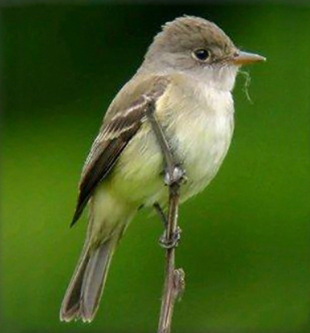
Photo credit: National Park Service
A southwestern willow flycatcher
Biological Resources/Endangered Species Act Section 7 Compliance
In coordination with the US Fish and Wildlife Service, Reclamation is preparing a Biological Assessment to fulfill requirements under Section 7 of the Endangered Species Act. In preparation of this report, Reclamation will conduct a general biological survey of flora, fauna, and vegetation communities, and a general avian nest survey. Reclamation will also complete threatened and endangered species habitat assessments for southwestern willow flycatcher, yellow-billed cuckoo, and Rio Grande silvery minnow.

Photo Credit: Bureau of Reclamation
A section of the Middle Rio Grande and Low Flow Conveyance Channel
Aquatic Resources/Wetlands/Clean Water Act Section 404/401 Compliance
In coordination with the US Army Corps of Engineers (USACE), Reclamation delineated aquatic resources, including wetlands and waters of the US, and prepared an aquatic resources inventory report. Reclamation completed aquatic resources delineation cross sectional transects within riparian wetland habitats adjacent to perennial river systems according to the USACE Wetland Delineation Manual and Arid West Regional Supplement. Reclamation is preparing Clean Water Act Section 404 and 401 permit applications to submit to the USACE.
Special Status Species
Rio Grande Silvery Minnow
Hybognathus amarus
Federal Listing Status: Endangered
Type of Habitat: The Rio Grande silvery minnow prefers river habitats with slow to moderate currents flowing over silt or silt/sand substrate. Rio Grande silvery minnow typically occupy river habitats with less than 15 inches of water depths and low to moderate velocity, such as eddies formed by debris piles, pools, backwaters, embayments, shorelines, and submerged vegetation.

Photo credit: US Army Corps of Engineers
A Rio Grande silvery minnow before being released back into the Rio Grande
Yellow-Billed Cuckoo
Coccyzus americanus
Federal Listing Status: Threatened
Type of Habitat: Yellow-billed cuckoo use wooded habitats with dense cover and water nearby, including woodlands with low, scrubby vegetation, overgrown orchards, abandoned farmland, and dense thickets along streams and marshes. In the American West, nests are often placed in willows along streams and rivers, with nearby cottonwoods serving as foraging sites.
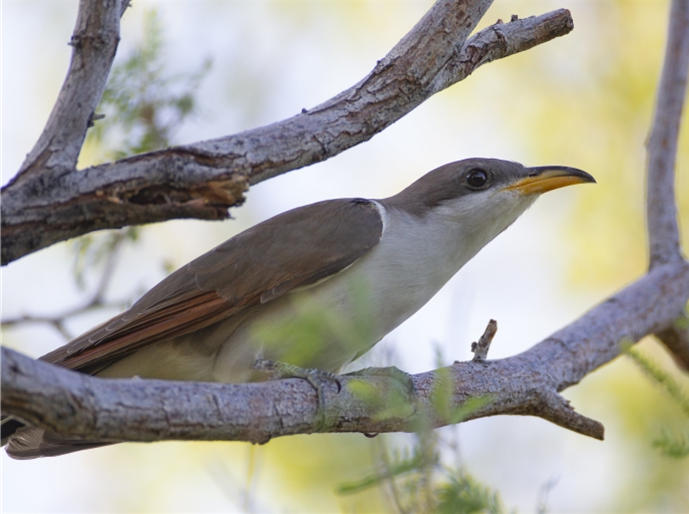
Photo credit: US Fish and Wildlife Service
A western yellow-billed cuckoo sits in a tree.
Southwestern Willow Flycatcher
Empidonax traillii extimus
Federal Listing Status: Endangered
Type of Habitat: Southwestern willow flycatchers are known to occur around the Rio Grande floodplain, the Low Flow Conveyance Channel, and the delta above Elephant Butte Reservoir. In the Middle Rio Grande drainage, southwestern willow flycatcher breed in riparian habitats containing dense stands of species, such as coyote willow (Salix exigua) and saltcedar (Tamarix sp.) that have a dense shrubby understory. In New Mexico, stream flows have been reported to correlate with nesting success, and nests are often constructed over standing water or wet soil. Suitable nesting habitat occurs in patches throughout the Middle Rio Grande valley and riparian bosque. Even if suitable nesting habitat is not present on the project site, migrating southwestern willow flycatcher may use the site as stopover or as foraging habitat.
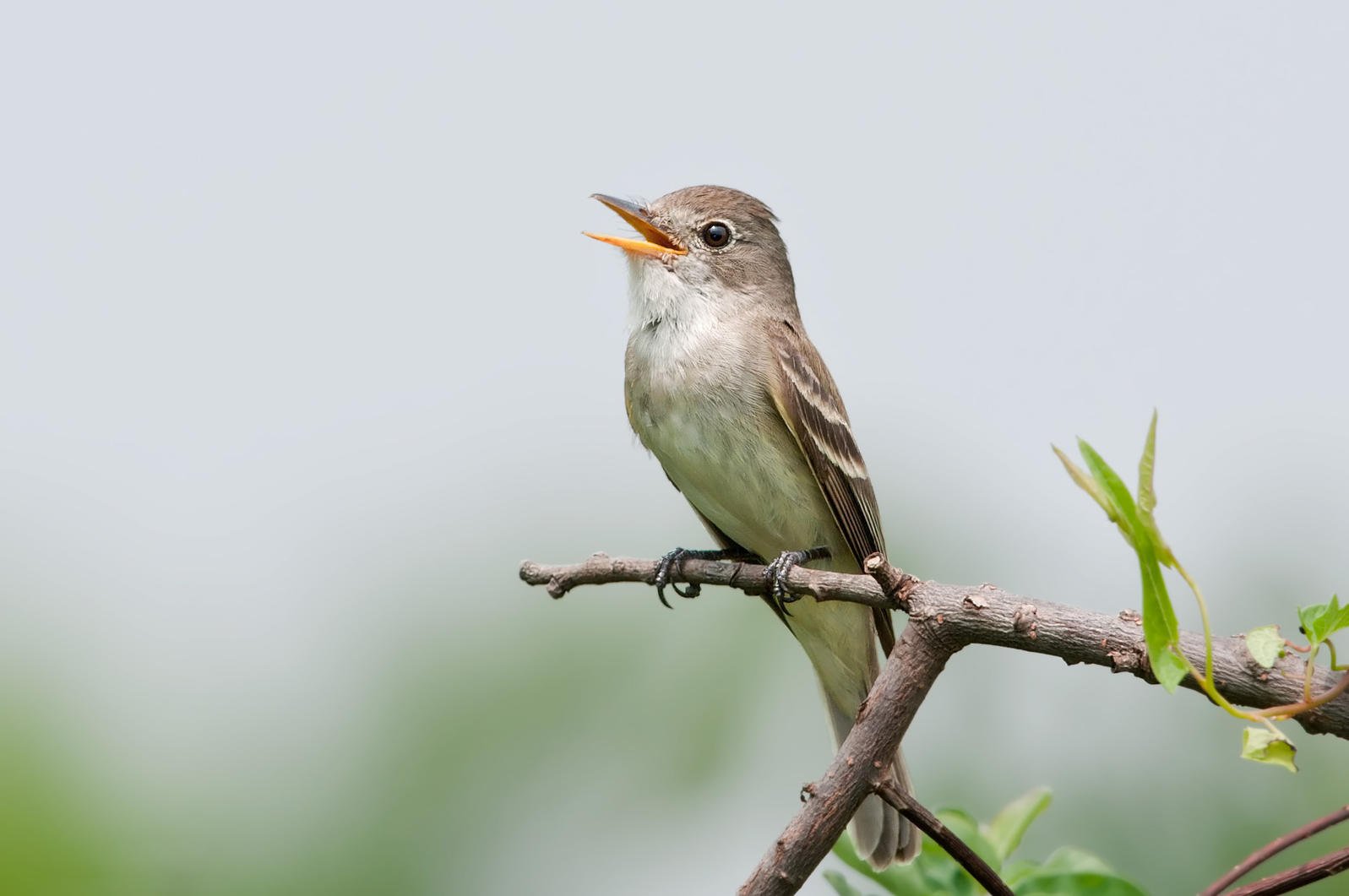
Photo credit: National Park Service
A southwestern willow flycatcher
Background Documents
For more information on the LSARI EIS, please contact David (Sonny) Cooper, Project Manager (bor-sha-aao-lsari@usbr.gov).
To be added to or removed from the mailing list, please contact Val Stanson (val.stanson@aecom.com).